
Who Shot the Red Baron? The Mystery Behind His Final Flight
- Apr 21
- 4 min read
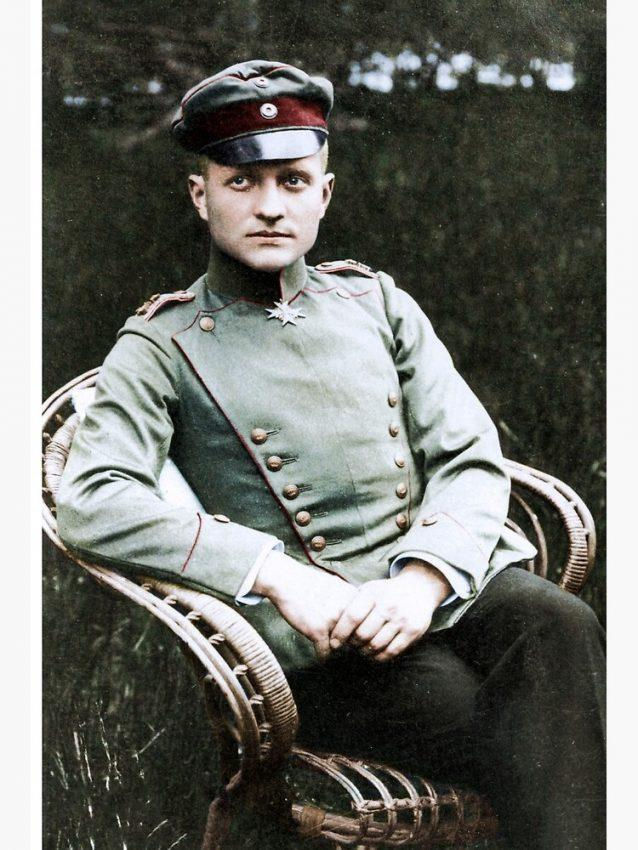
Fast Facts
Date: April 21, 1918
Pilot: Manfred von Richthofen
Nickname: The Red Baron
Confirmed victories: 80
Squadron: The Flying Circus
What’s debated: Who actually shot him down
Why This Matters
You’ve probably heard of the Red Baron.
Even if you’re not into World War I history, the name sticks. The red plane. The reputation. The idea that if you saw him in the sky, you were already at a disadvantage.
But what makes his story really interesting is not just how he lived. It is how his story ends.
Because for something that seems like it should be clear, it isn’t.
More than a hundred years later, people are still asking the same question. Who actually shot him down?
Opening the File
On April 21, 1918, Manfred von Richthofen went up on what would be his final flight over France.
At that point, he was not just another pilot. He was the pilot everyone knew.
He had 80 confirmed victories. His aircraft was painted bright red on purpose. He wanted to be seen.
And that is what made him both respected and targeted.
Inside the Investigation
How He Got There
Richthofen was not always a pilot.
He was born in 1892 into a well-off Prussian family. His early life was structured and disciplined. Military school started young, and by the time he became an officer, he was already used to that environment.
He started in the cavalry, not the air.
But once trench warfare took over and his role shifted to supply duties, he wanted out. He reportedly made it clear that he did not join the military to sit back and collect supplies.
So he asked for a transfer.
And that decision changed everything.
Becoming the Red Baron
By 1915, he was flying. At first as an observer, then as a pilot.
A major turning point came when he met Oswald Boelcke, a respected and strategic pilot who took him under his wing. Under that mentorship, Richthofen became more calculated, more disciplined, and much more dangerous in the air.
By early 1917, he was already leading in confirmed victories.
That is also when he painted his plane red.
It was not subtle. It was not meant to be.
It was a statement.
Soon, people started calling him the Red Baron. His squadron, known for its brightly painted planes and constant movement, became known as the Flying Circus.
And at that point, his reputation took off just as much as he did.
The Reality Behind the Reputation
What made Richthofen different was not just his skill. It was how controlled he was.
He was not reckless. He followed patterns. He waited for the right moment. And when he made a move, it counted.
In April 1917 alone, he shot down nearly two dozen aircraft.
He even kept track of his victories in a very personal way. He had small silver cups made to mark each one.
But even with that level of control, things started to change.
In July 1917, he was hit during a fight and suffered a head injury. He came back to flying quickly, but he was not the same. He dealt with headaches, and some historians believe he may have also been dealing with the effects of trauma.
That matters more than people think when you look at what happened next.

The Final Flight
On April 21, 1918, everything came down to one moment.
He was chasing a British plane. Focused. Locked in.
But this time, he went too far.
He flew low. Lower than he should have. And he crossed into enemy territory while still in pursuit.
In that moment, he was exposed.
From the air, Canadian pilot Arthur Roy Brown fired at him.
At the same time, Australian soldiers on the ground were shooting as his plane passed overhead. One of them, Cedric Popkin, had a clear angle.
Richthofen was hit once.
He managed to land, but he did not survive.
So… Who Shot Him?
Officially, the credit went to Arthur Roy Brown.
But when people looked closer at the evidence, things did not line up perfectly.
The angle of the wound suggested the bullet came from the side, not from behind. That makes ground fire a strong possibility.
Which means the most likely answer is that he was shot from the ground.
But officially, nothing changed.
And that is where the story stays.
The Long Shadow
What makes this story stick is not just how it ended, but how unclear that ending is.
Even with reports, witnesses, and analysis, there is still no full agreement.
And that brings up a bigger question.
How often do we accept a version of events simply because it was the one recorded first?
There is also something else that stands out.
After he died, Allied troops recovered his body and gave him a full military funeral. These were the same forces he had been fighting against.
They still chose to honor him.
That does not happen often in war.
So now you have a story that is part skill, part myth, and part mystery.
The most feared pilot in the sky was brought down.
But how it actually happened is still up for debate.
References
Encyclopaedia Britannica. “Manfred von Richthofen.”
Imperial War Museums. “The Red Baron.”
Australian War Memorial. “Who Shot the Red Baron?”
Smithsonian Institution. “The Red Baron’s Final Flight.”


Comments