
Satchel Paige: Too Old—or Locked Out of MLB?
- Feb 9
- 7 min read
Updated: Feb 9

Fast Facts
On February 9, 1966, Satchel Paige was nominated to the National Baseball Hall of Fame—decades after he had already proven himself one of the greatest pitchers to ever take the mound. Paige dominated the Negro Leagues for more than twenty years, drawing massive crowds with his precision, confidence, and showmanship, all while Major League Baseball enforced a silent color line. When MLB finally integrated, Paige was labeled “too old,” despite remaining highly effective. His eventual Hall of Fame nomination forced baseball to confront a hard truth: greatness had never been missing—opportunity had.
Why This Matters
We often talk about history as if it naturally corrects itself. As if time alone fixes injustice.
Satchel Paige’s story proves that isn’t true.
For decades, Paige was excluded not by written law, but by silence, tradition, and “the way things were done.” That kind of exclusion is harder to see—and easier to excuse. It leaves fewer records, fewer statistics, and fewer names in the official story.
When recognition finally arrived, it didn’t erase what was lost: seasons never played, records never counted, and opportunities never offered. It also didn’t just affect Paige. It shaped how baseball remembers its own past.
This matters because delayed justice doesn’t just harm individuals—it distorts history. And when history is distorted, the systems that caused the harm remain easier to defend.
Satchel Paige reminds us that greatness doesn’t need permission to exist—but it does need access to be remembered.
This story isn’t just about baseball. It’s about how exclusion reshapes history—and how long justice can be delayed.
At a Glance: Why Satchel Paige’s Story Matters
Hall of Fame nomination: Satchel Paige was nominated on February 9, 1966, decades after his prime.
Negro Leagues dominance: He spent over 20 years as one of the most feared and celebrated pitchers in Black baseball.
Locked out, not lacking: Paige was excluded from MLB because of segregation—not talent or performance.
Late MLB debut: He finally entered Major League Baseball in 1948, at roughly 42 years old.
World Series impact: Paige helped the Cleveland Indians win the 1948 World Series.
Age as an excuse: Teams labeled him “too old” only after decades of enforced exclusion.
Historic induction: In 1971, Paige became the first player inducted primarily for his Negro Leagues career.
Bigger than baseball: His legacy highlights how delayed access distorts records, recognition, and history itself.
On February 9, 1966, Satchel Paige was nominated to the National Baseball Hall of Fame.
By then, Paige wasn’t just a pitcher.
He was a living contradiction to everything American sports had claimed to stand former it, fairness, and excellence. His nomination didn’t simply honor a career. It exposed a silence that had lasted far too long.
This was not a story about late recognition.
It was a story about deliberate delay.
A Legend Before the League Would Admit It
Long before Major League Baseball ever acknowledged his existence, Satchel Paige was already a household name in Black America. He dominated the Negro Leagues for more than two decades, building a reputation so large it couldn’t be contained by box scores or official records. Paige wasn’t just effective he was magnetic.
He pitched with surgical control, placing the ball exactly where he wanted it, often against batters who knew what was coming and still couldn’t stop it. His confidence bordered on theatrical. He talked to the crowd. He talked to the hitters. Sometimes, he even told batters which pitch was coming next then struck them out anyway.
Fans packed stadiums not just to watch Paige win, but to watch him perform.
In an era when baseball sold itself as America’s pastime, Paige was already proving that excellence had never been confined to white-only leagues. Yet while crowds roared and legends grew, Major League Baseball looked the other way.
The Silence Was the Point
For most of Satchel Paige’s career, Major League Baseball pretended he didn’t exist.
That silence wasn’t accidental. It wasn’t about lack of scouting. And it certainly wasn’t about lack of talent. It was about segregation.
For decades, MLB operated under an unwritten but rigid color line no Black players allowed. The rule didn’t need to be written down to be enforced. Teams, owners, and league officials all understood the boundaries, and they upheld them with consistency.
Meanwhile, the Negro Leagues flourished.
Black teams filled stadiums, built rivalries, and produced players whose skill equaled and often exceeded anything seen in the majors. But because those leagues existed outside MLB’s official structure, their players were treated as footnotes instead of competitors.
Paige became the most visible casualty of that system.
He was too dominant to ignore, yet too Black to include.
Integration, With Conditions
When Major League Baseball finally began integrating in the late 1940s, it did so cautiously and selectively. Jackie Robinson’s debut in 1947 cracked the door open, but it did not erase decades of exclusion overnight.
By that point, Paige was already in his forties.
Suddenly, the narrative shifted.
Teams that had ignored him for years now claimed he was “too old.” The argument was convenient. It allowed baseball to acknowledge Paige’s talent without confronting the reason it had been suppressed for so long.
Age became the excuse. Segregation remained the cause.
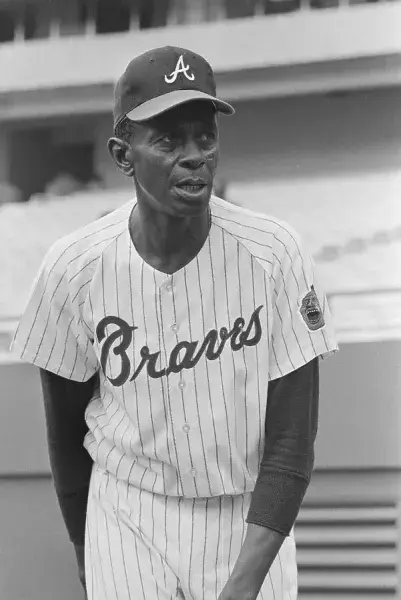
Proving the Point at 42
In 1948, at roughly 42 years old, Satchel Paige finally made his Major League debut with the Cleveland Indians.
If baseball expected a quiet appearance, it didn’t get one.
Paige delivered. He helped the Indians win a World Series. He pitched effectively against younger players who had enjoyed advantages he’d been denied. And he drew massive crowds everywhere he went.
Fans didn’t come out of nostalgia. They came because Paige could still dominate.
The myth that he had been “past his prime” collapsed in real time. What Paige proved again was that the talent gap never existed.
The opportunity gap did.
Baseball’s Incomplete History
By the 1960s, the sport was changing. Civil rights pressure was reshaping American institutions, and baseball could no longer ignore the contradiction between its self-image and its history.
When Satchel Paige was nominated to the Hall of Fame in 1966, it forced baseball to confront an uncomfortable truth.
Its history was incomplete.
The Hall had celebrated greatness selectively, honoring players who benefited from access while ignoring those who were denied it. Paige’s nomination wasn’t just about stats or longevity. It was an acknowledgment that baseball had left out entire chapters of its own story.
Recognition didn’t erase exclusion but it made the omission harder to justify.

Induction, At Last
In 1971, Satchel Paige was inducted into the Hall of Fame.
He became the first player honored primarily for his Negro Leagues career.
The moment was historic. It was also revealing.
Paige’s induction quietly admitted what Black fans had known all along: greatness had been present all along it had simply been excluded from official memory.
It was a correction. It was a reckoning. And it was late.
Law, Power, and the Architecture of Exclusion
Satchel Paige’s story isn’t just about baseball. It’s about how power works when exclusion is enforced quietly.
There was no written law barring Paige from Major League Baseball. No statute explicitly prohibited Black players from joining MLB teams. That’s what made the system so effective.
Discrimination doesn’t always need ink.
Private institutions sports leagues included often relied on “tradition,” “custom,” and “business decisions” to enforce racial boundaries without leaving a legal trail. These unwritten rules mirrored Jim Crow laws that governed housing, education, and employment across the United States.
The result was the same: opportunity denied, talent dismissed, and accountability delayed.
Even after legal and cultural shifts forced change, institutions moved slowly. Integration came with conditions. Recognition came decades later. Justice, when it arrived, was carefully controlled.
Paige’s delayed Hall of Fame recognition reflects a pattern seen far beyond sports: When exclusion is quiet, correction is slow.
The Cost of Waiting
What does it mean when greatness has to wait?
For Paige, it meant fewer seasons in the majors. Fewer official records. Fewer accolades during his prime. It meant that much of his brilliance lived in oral history rather than official archives.
For baseball, it meant a legacy built on omission.
Every delayed recognition carries a cost not just to the individual, but to the institution that withheld it. History becomes distorted. Narratives shrink. And future generations inherit an incomplete version of the truth.
A Question That Still Lingers
Satchel Paige once asked:
“How old would you be if you didn’t know how old you was?”
For baseball, the better question may be this:
How different would the game look if justice hadn’t been delayed?
How many records would read differently ?How many legends would have been household names sooner? How many barriers would have fallen earlier if institutions had acted when they should have?
A Legacy That Waited—and Endured
Satchel Paige’s legacy is not just about pitching. It’s about persistence in the face of erasure. It’s about excellence that refused to disappear, even when denied recognition.
Talent doesn’t vanish when it’s ignored. Truth doesn’t fade when it’s inconvenient. And history, when confronted honestly, always asks more of us than comfort allows.
Paige waited.
And when recognition finally arrived, it didn’t just honor him it exposed everything that had stood in his way.
Note:
This article draws on Hall of Fame records, player autobiographies, Library of Congress archival collections, and peer-reviewed historical scholarship on Negro Leagues baseball and segregation in American sports. A selected list of sources is provided above.
References
Baseball Hall of Fame. Satchel Paige. National Baseball Hall of Fame and Museum, www.baseballhall.org/hall-of-famers/paige-satchel. Accessed 9 Feb. 2026.
Gibson, Tim. Satchel Paige: Striking Out Jim Crow. McFarland & Company, 2005.
Holway, John B. Voices from the Great Black Baseball Leagues. Dodd, Mead & Company, 1975.
Lanctot, Neil. Negro League Baseball: The Rise and Ruin of a Black Institution. University of Pennsylvania Press, 2004.
Library of Congress. The Negro Leagues Baseball Collection. Library of Congress, www.loc.gov/collections/negro-leagues-baseball. Accessed 9 Feb. 2026.
Paige, Satchel, and David Lipman. Maybe I’ll Pitch Forever. Doubleday, 1962.Peterson, Robert. Only the Ball Was White. Oxford University Press, 1970.


Comments